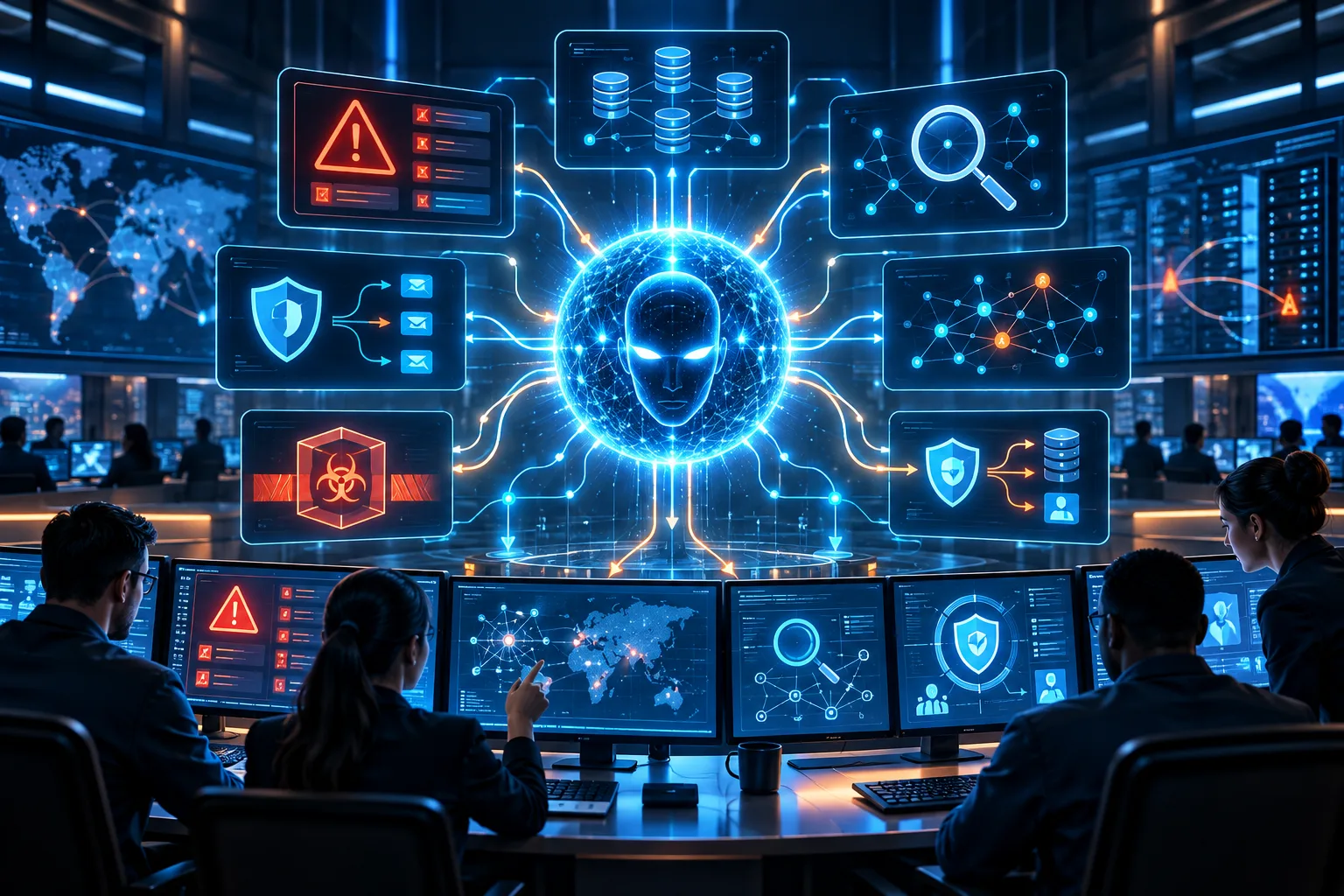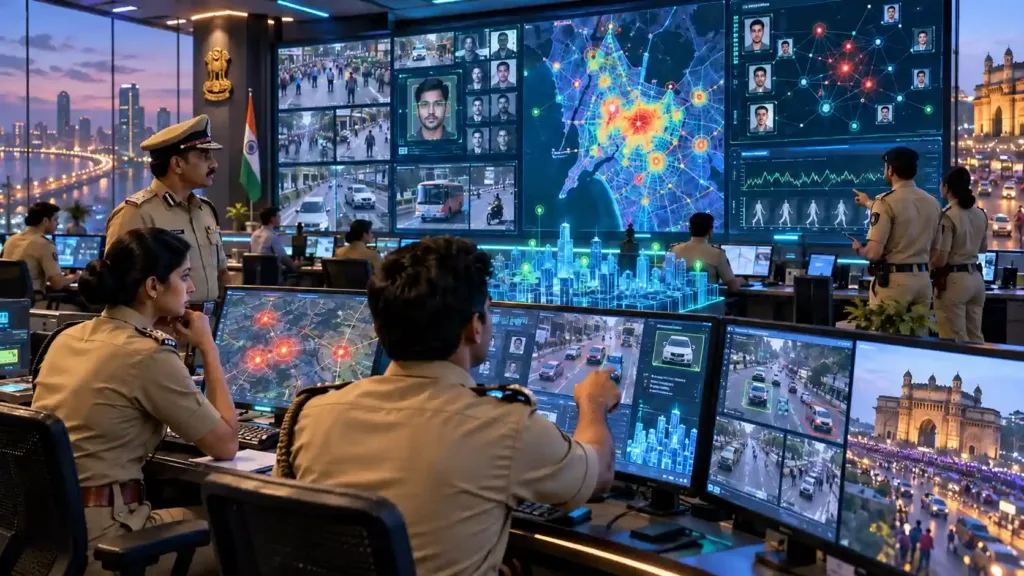
Your investigators are drowning in data they can’t use fast enough. Case files pile up, CCTV feeds run in real time but get reviewed after the fact, and the officer who might spot a pattern across three districts is stuck writing case diaries in one. This isn’t a resourcing problem you can fix by adding more constables. It’s a data problem, and it needs a data solution.
Machine learning has moved past the buzzword stage in law enforcement. It’s now running inside crime records systems, facial recognition units, and cybercrime cells across the country. This piece breaks down what machine learning actually does in policing, where it delivers real results, where it needs guardrails, and what to ask before you bring it into your department.
Key Takeaways
- Indian policing is under measurable strain: pending IPC investigations rose from 28% to 29.2% in a single year, and cybercrime cases jumped over 31%, according to NCRB’s Crime in India 2023 report.
- Machine learning in policing works best in four areas: pattern recognition across cases, hotspot and resource prediction, facial and identity matching, and cybercrime detection.
- Controlled evaluations show real impact. A RAND Corporation study of a predictive policing pilot found a roughly 35% drop in property crime in the treatment districts during the active intervention period.
- Bias and accountability are legitimate concerns, not reasons to avoid the technology. They’re reasons to choose systems built with auditability and human oversight from the ground up.
- The right ML deployment doesn’t replace investigators. It gives them a shorter, better-ranked list of leads to work from.
The Pressure Police Departments Are Actually Under

Before talking about the technology, it’s worth naming the problem it’s meant to solve.
Case backlogs are growing, not shrinking. Pending investigations under the Indian Penal Code rose from 28% to 29.2% between 2022 and 2023, even as the charge-sheeting rate improved slightly to 72.7%. That means departments are closing more cases and still falling further behind, because the volume of crime is outpacing investigative capacity.
Cybercrime is the fastest-growing category by far. Cases rose 31.2% in a single year, driven largely by cheating through personation, while offences under the IT Act climbed 36%. Traditional investigation methods, built around physical evidence and eyewitnesses, were never designed for crimes that leave digital trails spread across servers, apps, and jurisdictions.
At the same time, departments face three structural challenges that no amount of manpower alone will fix:
- Crime is reactive by default. Officers respond to what already happened instead of anticipating where resources are needed next.
- Serial and networked crime is hard to see manually. A pattern spanning dozens of FIRs across multiple districts is nearly invisible to someone working case by case.
- Every tool now has to survive scrutiny. Any system touching predictive analysis or facial matching will be questioned on fairness, and departments need to be able to answer that question with evidence, not assurances.
This is the gap machine learning is built to close.
What Machine Learning Actually Does in a Policing Context

Strip away the sci-fi framing, and machine learning in policing comes down to one thing: finding patterns in data faster and more consistently than a human reviewing files one at a time can.
It doesn’t predict who will commit a specific crime. It doesn’t replace an investigating officer’s judgment. What it does is surface connections, i.e., a set of FIRs that share a method, a location cluster with a rising trend, and a face that matches a record buried in an old database so that trained personnel can act on stronger leads faster.
1. Pattern and Case Linking
Crime records are unstructured by nature: narrative text, varying formats, and inconsistent terminology across districts. Machine learning models can scan this data, score similarity across cases, and flag likely links that a manual cross-check would take days or weeks to find. This is the modern version of what a sharp crime analyst has always tried to do, just applied across a far larger dataset, far faster.
2. Hotspot and Resource Prediction
Predictive analytics models look at historical crime data, seasonal patterns, and local trends to flag where and when certain crime types are more likely to spike. Deployed correctly, this doesn’t mean over-policing an area. It means putting patrol strength and surveillance resources where the data says they’re actually needed, instead of spreading them evenly across a jurisdiction regardless of risk.
3. Facial Recognition and Identity Matching
For investigators working with CCTV footage, crowd surveillance, or old mugshot databases, machine learning-driven facial recognition dramatically cuts down manual review time. It’s particularly valuable in missing persons cases and in identifying repeat offenders across jurisdictions where paper-based record checks would take far too long.
4. Cybercrime Detection
Given how sharply cybercrime is growing, machine learning models trained to flag anomalous transaction patterns, phishing infrastructure, and fraud networks give cyber cells a fighting chance to keep pace. This is less about a single alert and more about continuously scoring risk across huge volumes of digital activity that no team could review manually.
5. Public Safety Systems
Gunshot detection sensors, automated triangulation, and real-time alerting systems all rely on machine learning to interpret sensor data and cut down response time, often getting resources to a scene before a call is even placed.
Does It Actually Work? What the Evidence Shows

This is the question that matters most to decision-makers, and it deserves a straight answer grounded in controlled evaluation, not vendor claims.
The most rigorous evaluation of predictive policing to date comes from a National Institute of Justice-funded pilot in Shreveport, Louisiana, evaluated independently by the RAND Corporation. The evaluation found that property crime decreased by approximately 35% in the treatment districts during the first four months of a seven-month period, compared with control districts. Notably, when the department scaled back its intervention effort partway through, the crime rate reverted. The lesson for leadership is direct: the technology works when it’s paired with sustained operational follow-through. A predictive model without the resourcing to act on its output is just a dashboard. Techdirt
This is the honest framing to carry into any deployment decision: machine learning improves the quality of information reaching your officers. It does not substitute for the officers acting on it.
Getting It Right: Accountability and Fairness
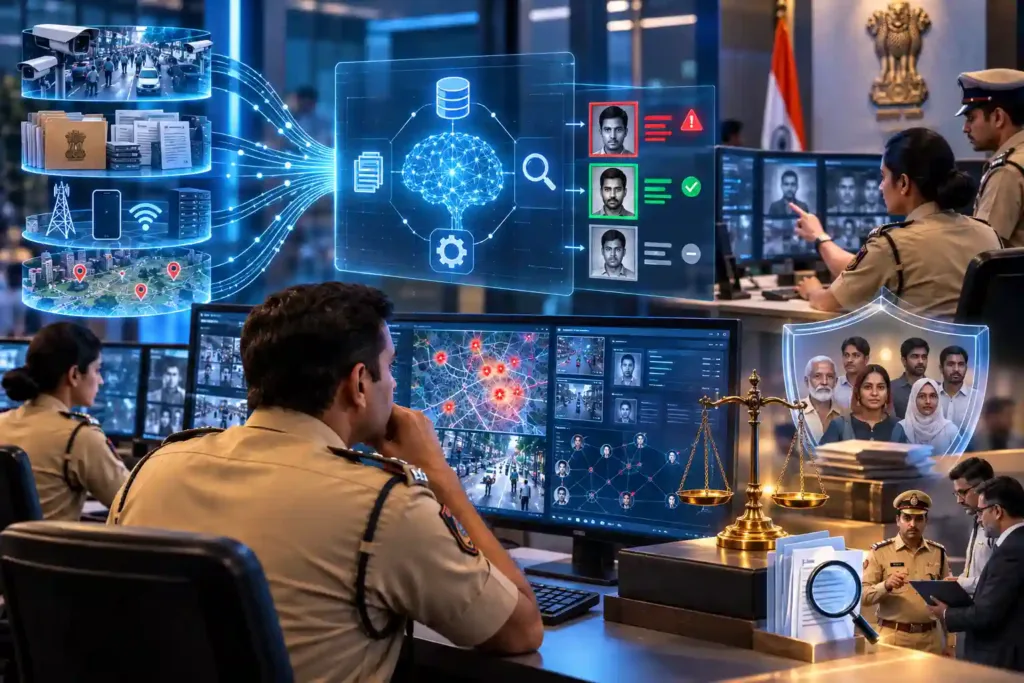
Any department evaluating these tools has likely already heard the criticism that predictive and facial recognition systems can embed bias and disproportionately affect certain communities. This concern is legitimate and shouldn’t be waved away.
The response isn’t to avoid the technology. It’s to choose systems and processes built around three principles:
- Data-only, not identity profiling. Models should train on crime and case data, not on demographic proxies that quietly reintroduce bias.
- Human review at every decision point. A machine learning output should be a lead for a trained officer to verify, never an automatic trigger for action.
- Auditability. Departments should be able to show, on demand, what data a model used and why it flagged a particular result. If a vendor can’t provide that transparency, that’s a disqualifying gap.
Building accountability into the system from day one is what separates a defensible deployment from a liability.
What to Look for When Evaluating a Machine Learning Policing Platform

If your department is at the evaluation stage, a few questions cut through vendor marketing fast:
- Does the platform integrate with your existing crime records and CCTNS data, or does it require a parallel system?
- Can results be explained and audited, not just delivered as a black-box score?
- Has the vendor deployed this with government or law enforcement clients before, and can they show it?
- Does the system support your investigators’ workflow, or does it add another dashboard nobody has time to check?
These are the questions worth spending time on before any procurement conversation goes further.
Where Innefu Fits In

Innefu Labs works specifically with law enforcement and government agencies on this exact problem: turning fragmented crime and identity data into actionable intelligence, without losing sight of accountability. Areas worth exploring on our site include our [predictive policing and crime analytics solutions], our [facial recognition and identity verification platform], and our [cybersecurity and threat intelligence offerings].
If your department is weighing how machine learning fits into your current investigative workflow, the most useful next step is usually a working conversation, not a slide deck. [Schedule a demo with our team] to see how these systems handle your actual data and use cases.
Frequently Asked Questions
1. Does machine learning replace human investigators in policing?
No. It narrows down leads and surfaces patterns from large datasets, but every output still requires review and action by a trained officer. It’s a decision-support tool, not a decision-maker.
2. Can predictive policing lead to biased outcomes?
It can, if models are built or deployed carelessly. The safeguard is training models on crime and case data rather than demographic proxies, keeping human review in the loop, and choosing platforms that allow full auditability of how a result was generated.
3. What’s the difference between predictive analytics and facial recognition in this context?
Predictive analytics forecasts where and when crime trends are likely to occur, helping with resource allocation. Facial recognition matches individuals against existing records for identification, most often used in missing persons cases and suspect verification.
4. How long does it typically take to see results from a predictive policing deployment?
Evaluated pilots have shown measurable drops in targeted crime categories within months, but results depend heavily on whether departments sustain the operational response the data points them toward. The technology informs action; it doesn’t substitute for it.
5. Is machine learning only useful for large metropolitan police departments?
No. Smaller departments dealing with limited analyst bandwidth often see the most relative benefit, since the technology compensates for manpower constraints that larger, better-staffed cyber and crime analytics units may not face as acutely.